Why Sock Quality Matters: A Guide for Brands and Buyers
For brands sourcing custom socks for the first time, quality is often treated as a given — something that can be assumed rather than specified. In practice, sock quality is determined by a series of technical decisions made during production, and those decisions have a direct impact on customer satisfaction, return rates, and brand reputation. This guide explains what sock quality actually means in manufacturing terms, why it matters commercially, and what to look for when evaluating a production partner.
What "Quality" Means in Sock Manufacturing
Sock quality is not a single attribute — it is the result of several interdependent production factors.
Yarn composition and grade
The fiber blend determines softness, durability, breathability, and how the sock performs after repeated washing. A sock made from combed cotton retains its softness longer than one made from carded cotton. A polyamide-elastane blend holds its shape better than a cotton-only construction. These are not cosmetic differences — they affect how the sock feels after 10, 20, or 50 washes. For brands sourcing custom cotton socks or bamboo socks, specifying the yarn grade upfront makes a measurable difference in the final product.
Knitting structure
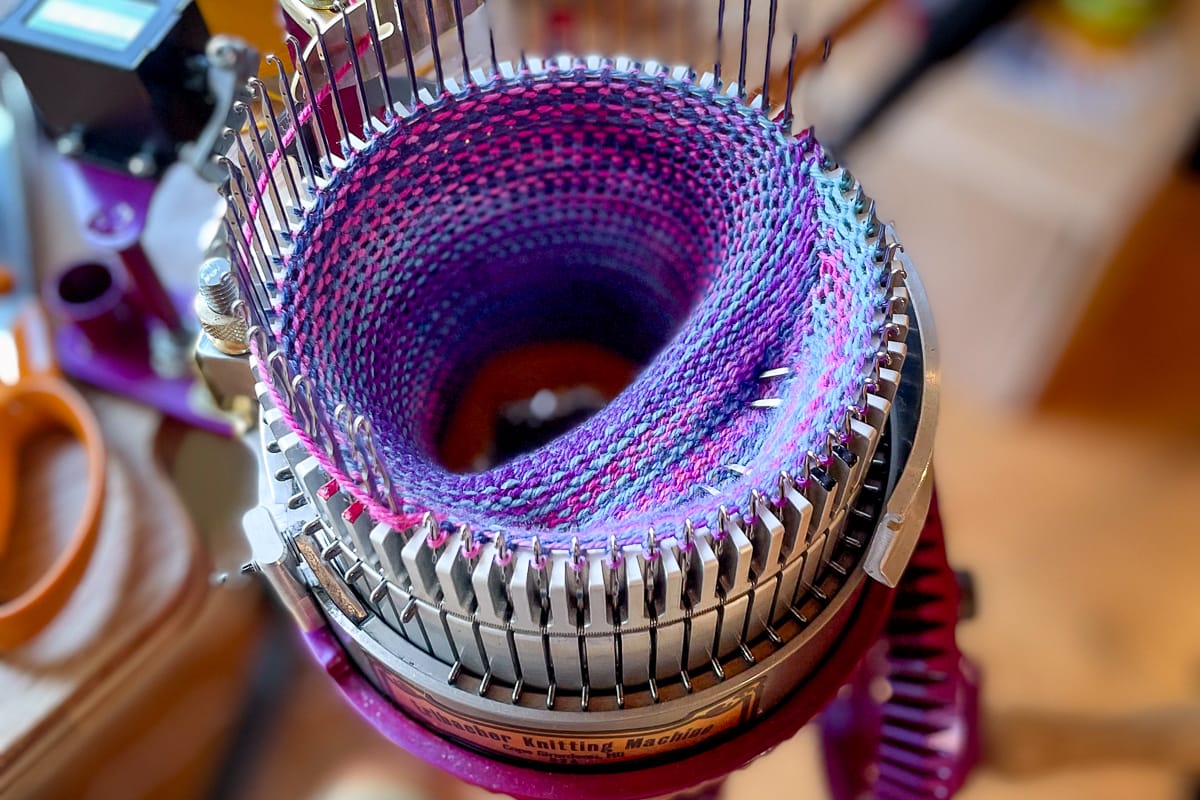
The gauge of the knitting machine, the density of the stitch, and the programming of cushioning zones all affect how a sock performs in use. A well-engineered sports sock will have targeted terry cushioning under the heel and forefoot, mesh ventilation panels across the instep, and a structured arch support band. A poorly engineered one will look similar but feel different from the first wear.
Toe closure method
The toe seam is the most common source of discomfort in socks. Linked toe construction — where the toe is closed on a separate linking machine — produces a flat, smooth seam that sits cleanly against the foot. Hand-linked toe closure is the premium standard. Overlock seaming is faster and cheaper, but creates a bulkier seam that many wearers find uncomfortable over time. For medical and diabetic socks, seamless toe construction is not optional — it is a core product requirement.
Elastic tension and cuff construction
The cuff of a sock should stay in place without leaving marks on the leg. This requires precise elastic tension calibrated to the yarn blend and intended wearing duration. Compression socks require especially precise calibration — a few millimeters of mercury difference from the specified range affects both comfort and therapeutic function.
Dimensional consistency
A quality manufacturer produces socks that are consistent in weight, length, and width across every pair in a production run. Inconsistent sizing is a common quality problem in low-cost production and one of the most damaging for branded retail programs, where customers expect every pair to fit the same way.
Why Sock Quality Matters for Your Brand
For B2B buyers — whether you are launching a private label sock line, adding branded socks to a retail range, or sourcing custom socks for corporate programs — quality has a direct commercial impact.
Repeat purchase rates
Customers who receive a sock that holds its shape, stays soft, and remains comfortable after washing will reorder. Customers who receive a sock that pills, loses elasticity, or develops holes after a few wears will not return — and will often say so publicly. For DTC brands and e-commerce sellers, this is the difference between a successful product and a costly mistake.
Brand perception
A sock is a physical embodiment of your brand. If you sell premium activewear and your branded performance socks deteriorate quickly, it undermines the credibility of your entire product line. For corporate gifting programs, a low-quality sock is remembered longer than a good one.
Return and replacement costs
Quality problems in socks are rarely caught at delivery — they emerge after the first or second wash. By the time a brand becomes aware of a production quality issue, a significant portion of the inventory may already be in the market. The cost of managing returns, replacements, and customer communications often exceeds the savings made on a cheaper production quote.
Retailer compliance
Brands supplying into retail chains or large platforms face quality standards that are non-negotiable. OEKO-TEX certification, dimensional tolerances, seam finish standards, and wash durability requirements are enforced at the point of entry. A manufacturer who cannot meet these standards creates problems that go beyond the product itself.
How to Evaluate Sock Quality Before Bulk Production
The most effective way to assess a manufacturer's quality standard is through the sample stage. When you receive a pre-production sample, evaluate:
- Color accuracy against your Pantone references
- Yarn softness and hand feel
- Toe seam finish — is it flat and smooth?
- Cuff tension — does it stay up without marking the leg?
- Overall weight — does it feel substantial, or thin?
- Knit consistency — are there any dropped stitches or uneven areas?
For sports and compression socks, also assess the cushioning zone definition, arch support feel, and whether the sock maintains its shape when worn and removed.
One revision round is standard. If a manufacturer's first sample is significantly off on color, size, or construction, treat this as a signal — not an anomaly to overlook.
Material Quality: What to Specify
The material brief you share with your manufacturer sets the quality ceiling of your product. Vague briefs produce vague results.
| Sock Category | Recommended Specification | Why It Matters |
|---|---|---|
| Cotton socks | Combed cotton, minimum 75% cotton, + polyamide + elastane | Better softness, durability, and shape retention vs standard cotton blends |
| Sports socks | Specify moisture management requirement — Coolmax-type or polyamide-elastane technical blend | Breathability and sweat control directly affect comfort during activity |
| Compression socks | Target mmHg range at ankle, confirm pressure measurement testing | Visual inspection alone cannot verify compression accuracy |
| Bamboo socks | OEKO-TEX or GOTS certification documentation | Confirms the yarn matches what is claimed on the specification sheet |
| Grip socks | Silicone grip adhesion test, wash durability spec (minimum 30+ cycles) | Grip that peels after a few washes destroys the product's core value proposition |
What Good Manufacturing Looks Like in Practice
A quality-focused sock manufacturer operates differently from a high-volume price-focused factory:
- They push back when a specification will create a quality problem. If a requested yarn blend will not achieve the stated compression range, a good manufacturer will say so before production — not after.
- They produce accurate samples the first time. Sample inaccuracy is a production efficiency problem, not just a design one. A manufacturer whose first sample consistently misses color or size specifications is signaling a deeper process control issue.
- They maintain consistent quality across reorders. The most important quality test is not the first batch — it is the third or fourth. A reliable manufacturer keeps your technical specification on file and matches it precisely on every reorder.
- They are transparent about what they can and cannot produce. Quality problems in socks almost always trace back to a misalignment between what was promised and what was actually possible.
Frequently Asked Questions
How do I know if a sock manufacturer uses quality materials?
Ask for OEKO-TEX certification documentation, request the yarn specification sheet for your product, and order a physical sample before bulk production. A manufacturer confident in their materials will share this information without hesitation.
What is the difference between combed and carded cotton in socks?
Combed cotton undergoes an extra processing step that removes short fibers and impurities, resulting in a softer, stronger, and more uniform yarn. For branded retail socks, combed cotton is the standard. Carded cotton is cheaper but produces a coarser feel and shorter product lifespan.
Why do some custom socks lose their shape after washing?
Shape loss after washing is almost always a yarn or construction issue. Insufficient elastane content, low-grade yarn, or incorrect knit tension all contribute to a sock that stretches out and does not recover. Specifying your elastane percentage and requesting a wash durability test from your manufacturer helps prevent this.
What certifications should a quality sock manufacturer have?
For European markets, OEKO-TEX Standard 100 is the most important — it confirms materials are tested for harmful substances. For organic products, GOTS certification verifies the supply chain. BSCI or Sedex membership confirms social compliance standards in the factory.
How many wash cycles should a quality sock withstand?
For everyday retail socks, a minimum of 30-50 wash cycles without significant shape loss, color fading, or pilling is a reasonable quality benchmark. For grip socks, silicone adhesion should be maintained for at least 30 washes. Compression socks should retain their mmHg rating across repeated washing.
Is Turkish sock manufacturing quality comparable to European production?
Yes. Turkish sock manufacturers — particularly established family-owned operations — use the same Italian and German knitting machinery as European producers, source certified yarns, and meet the same compliance standards required by European retail chains. Turkey is the world's second-largest sock exporter for this reason.
At Goren Socks, we have been manufacturing socks in Istanbul for over 60 years across cotton, bamboo, sports, compression, grip, and medical categories — using Italian knitting machines and OEKO-TEX certified yarns. If you are evaluating manufacturing partners, we are happy to send samples and walk you through our quality control process before any commitment is made.
Get a Free Sample & Consultation →Further reading: B2B guide to custom sock manufacturing · How to find a sock manufacturer · How to choose custom sock manufacturers